Healthy Tips

Small habits, healthier lives

Simple, everyday steps to protect your heart, catch problems early and feel your best. Tap any tip to open it full size, then save or share it with someone you love.
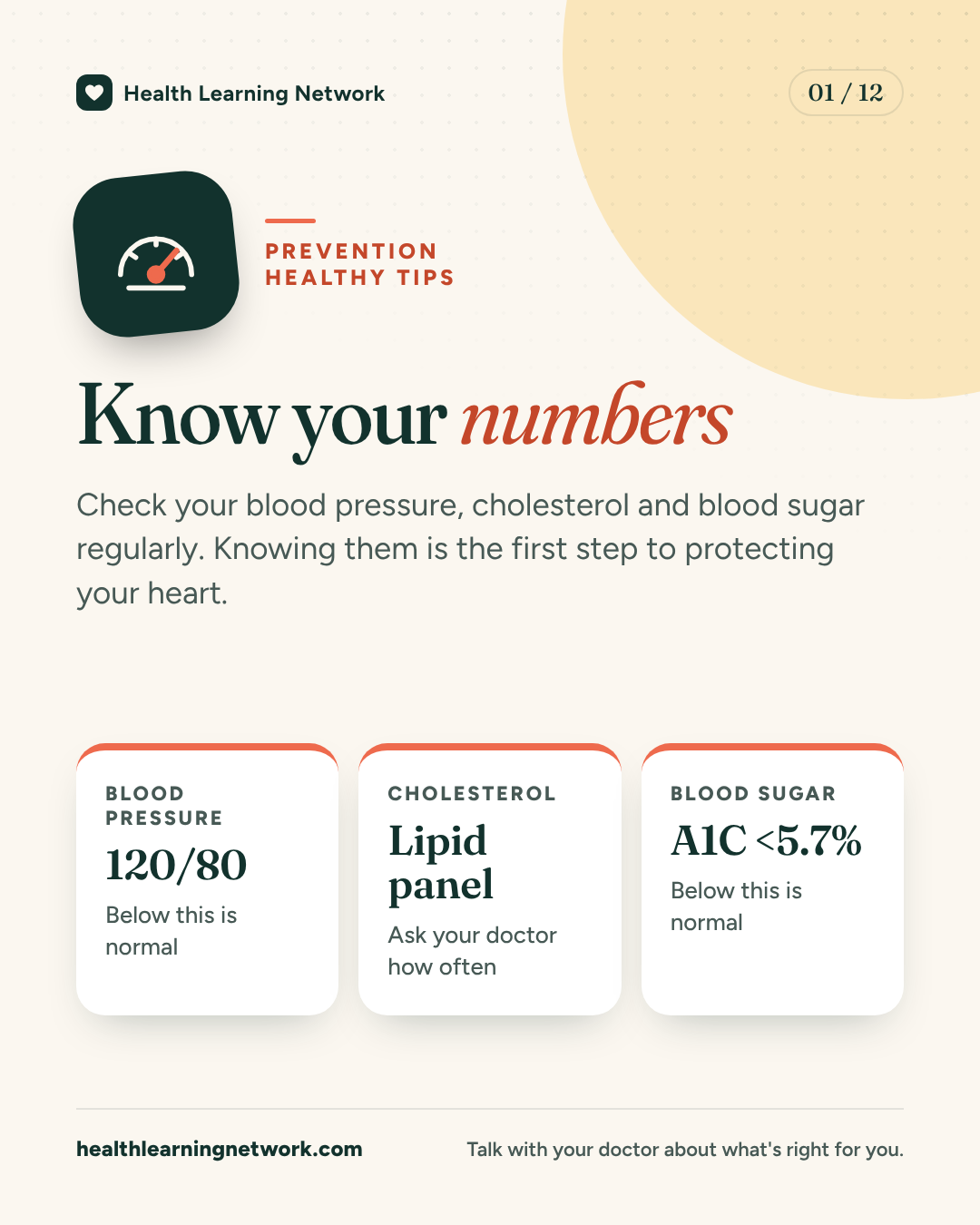
Know your numbers: check blood pressure, cholesterol and blood sugar regularly. Blood pressure below 120/80 is normal; ask about a lipid panel; A1C below 5.7% is normal.
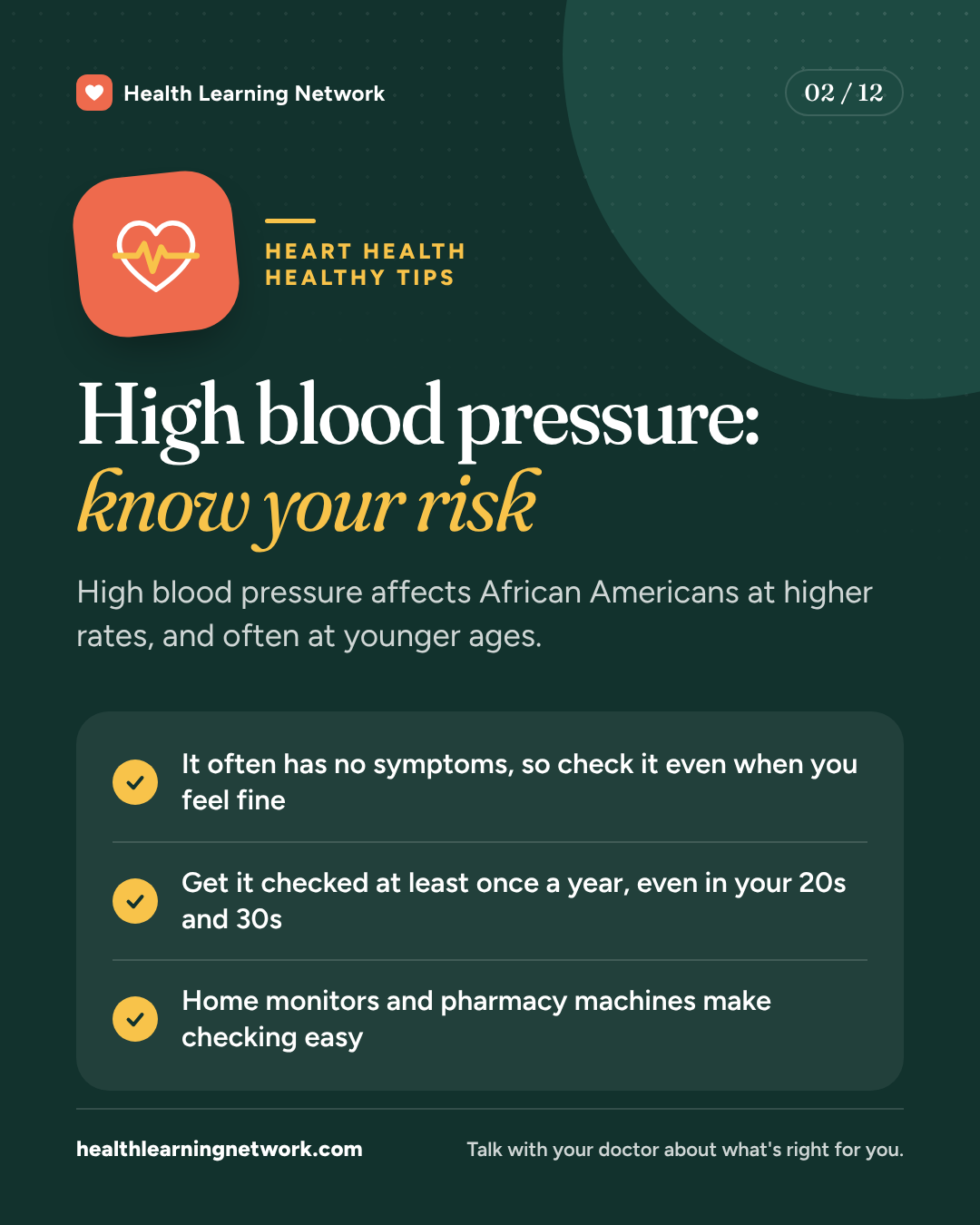
High blood pressure: know your risk. It affects African Americans at higher rates and often at younger ages. It often has no symptoms, so get it checked at least once a year.
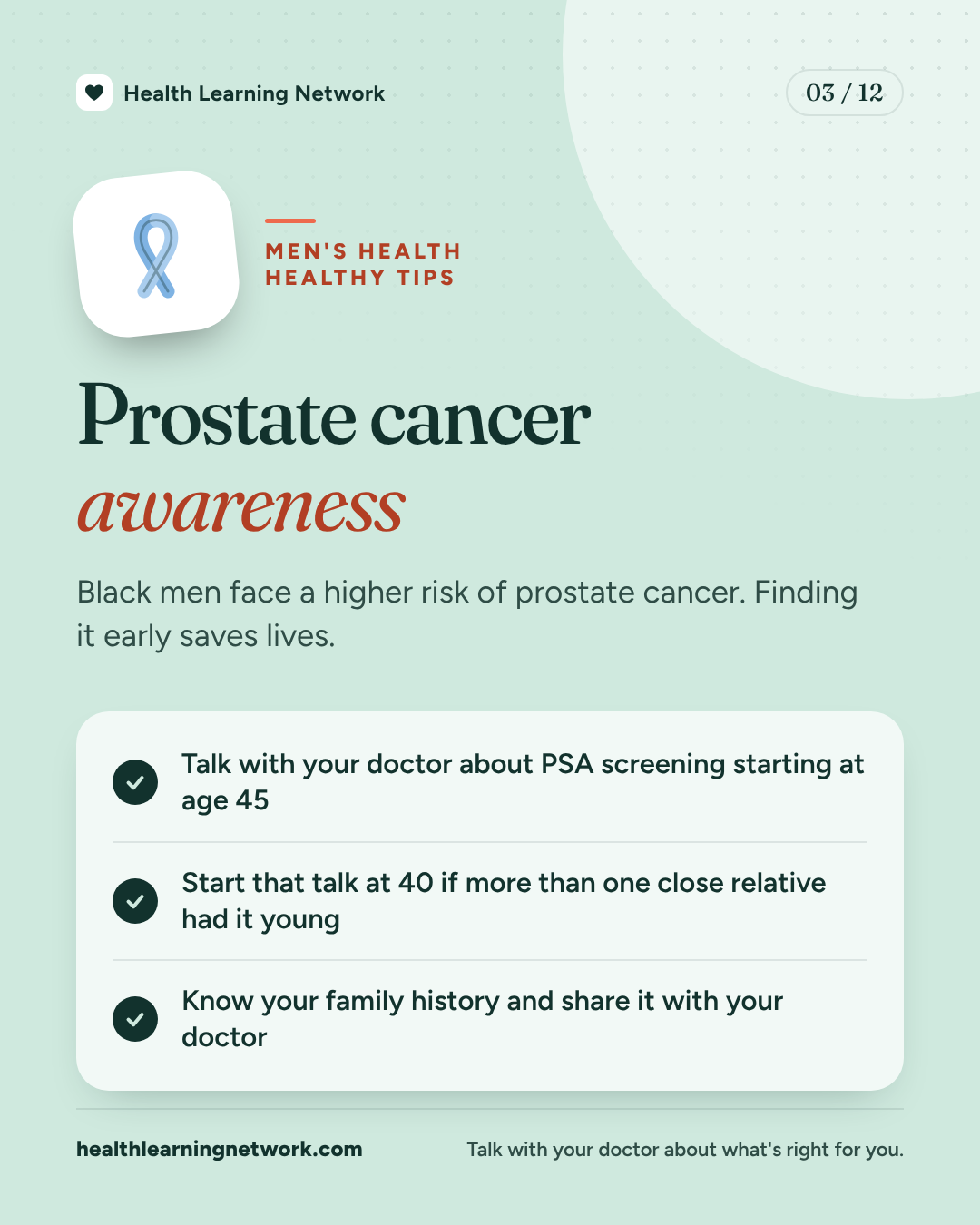
Prostate cancer awareness: Black men face a higher risk. Talk with your doctor about PSA screening starting at age 45, or at 40 if more than one close relative had it young, and share your family history.
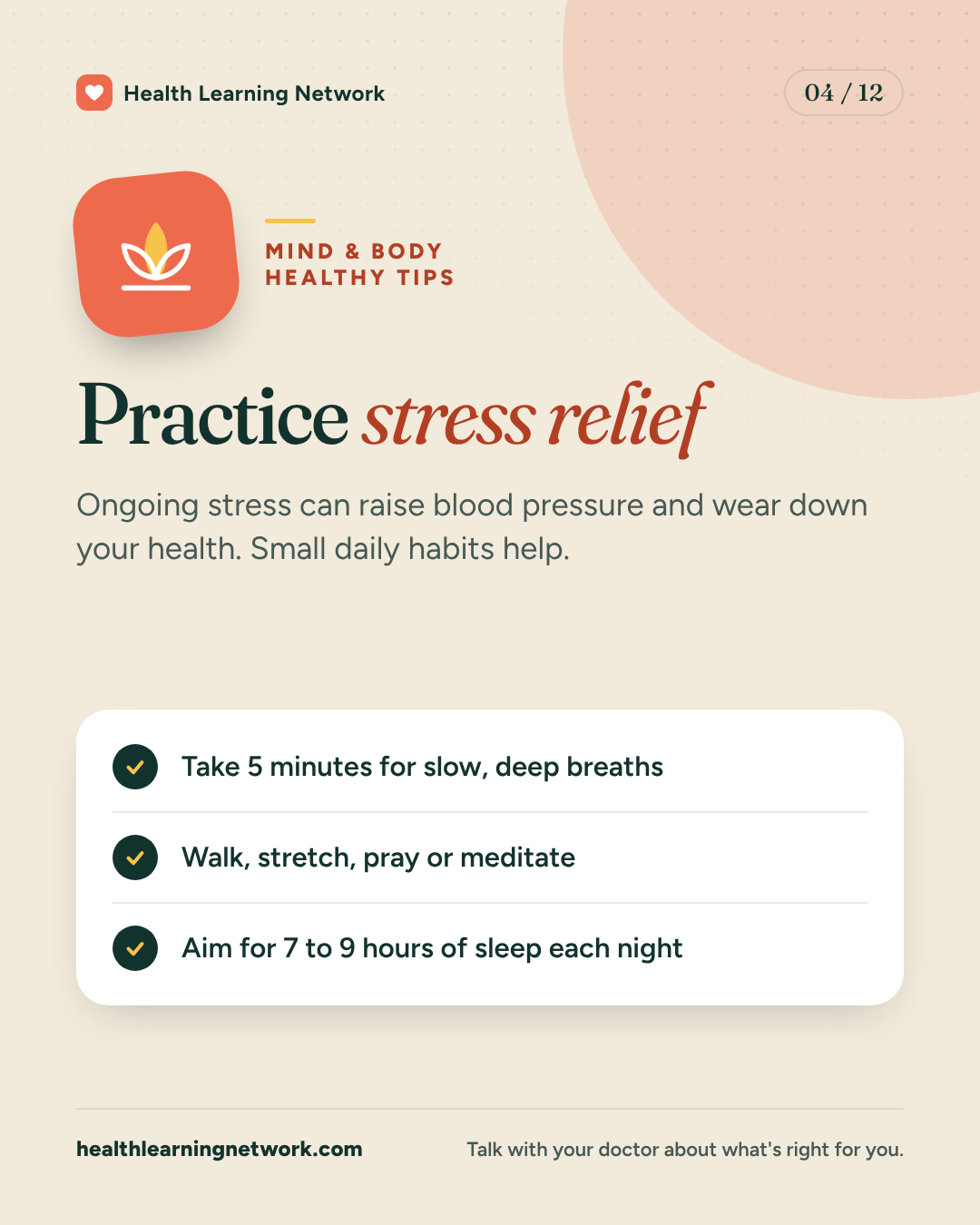
Practice stress relief: ongoing stress can raise blood pressure. Take 5 minutes for slow, deep breaths, walk, stretch, pray or meditate, and aim for 7 to 9 hours of sleep each night.
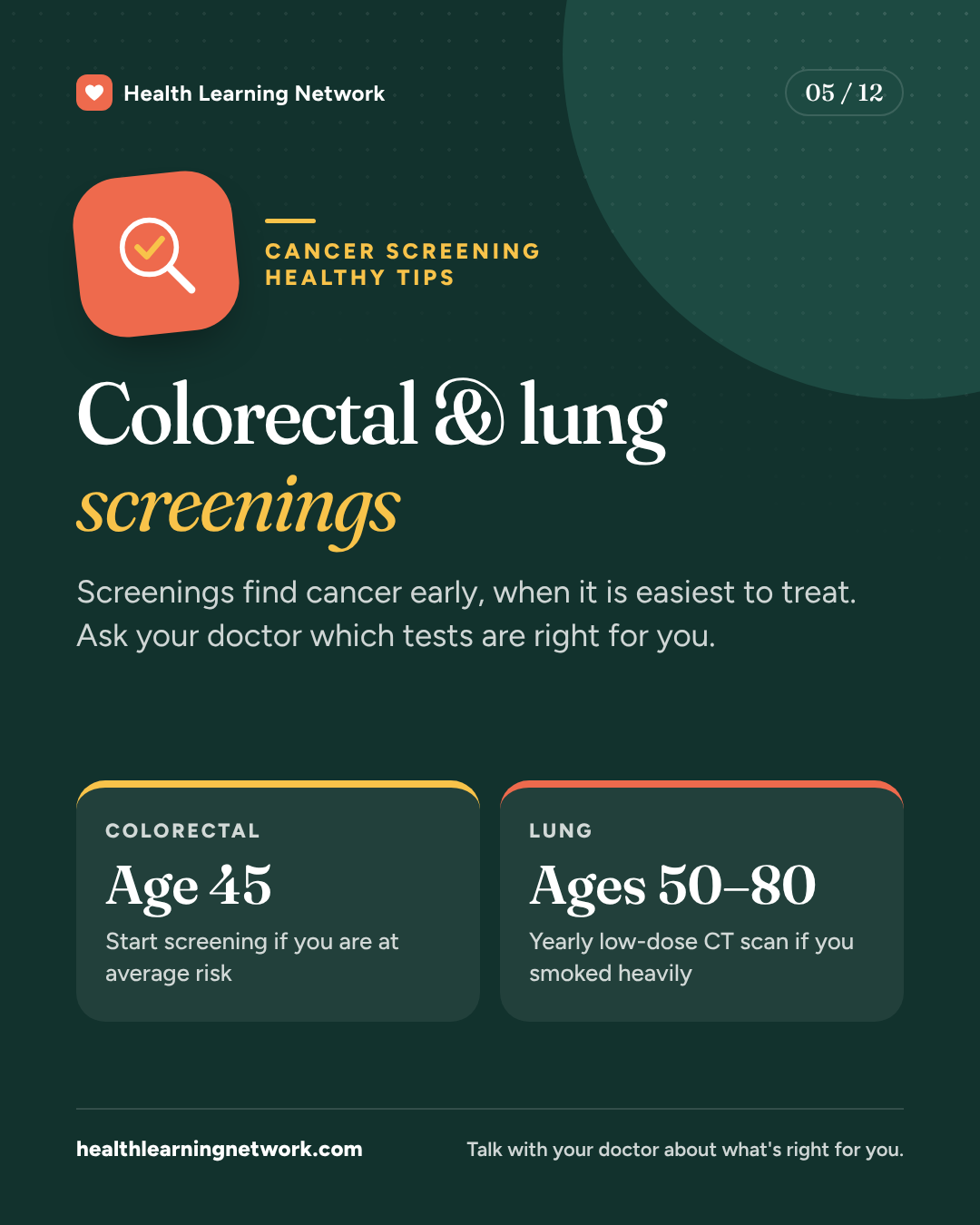
Colorectal and lung screenings: start colorectal screening at age 45 if at average risk; yearly low-dose CT lung scan for ages 50 to 80 if you smoked heavily.
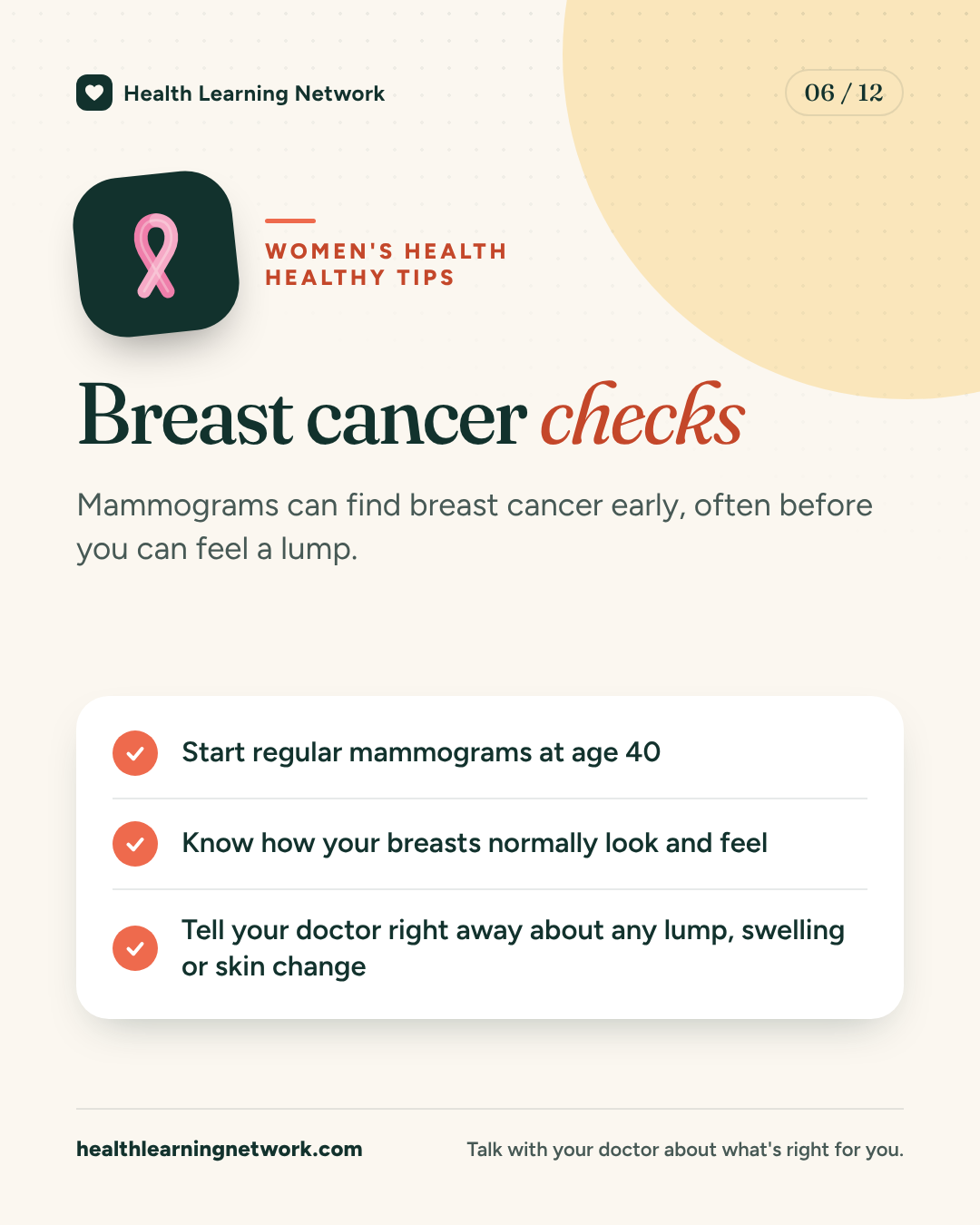
Breast cancer checks: start regular mammograms at age 40, know how your breasts normally look and feel, and report any lump, swelling or skin change.
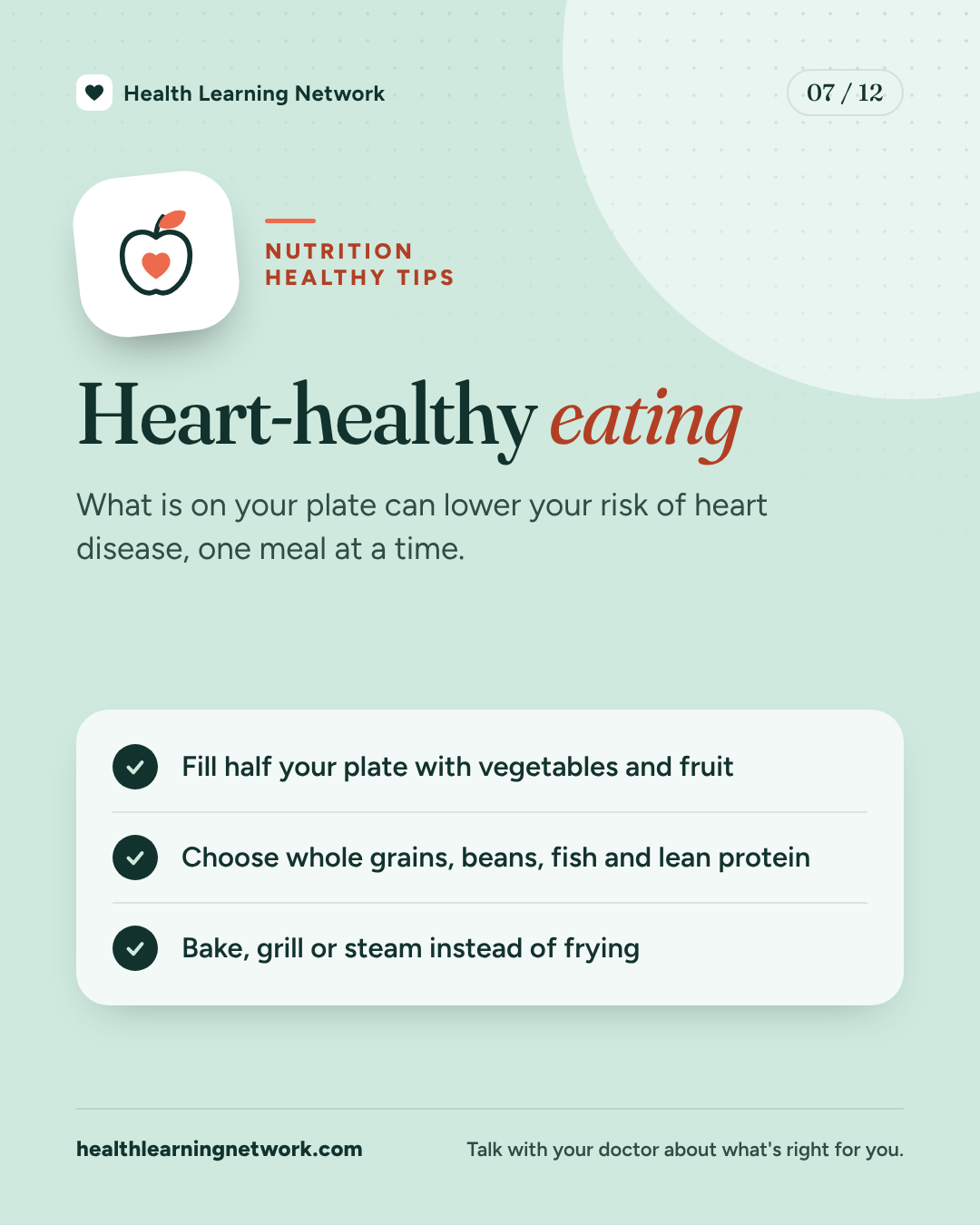
Heart-healthy eating: fill half your plate with vegetables and fruit, choose whole grains, beans, fish and lean protein, and bake, grill or steam instead of frying.
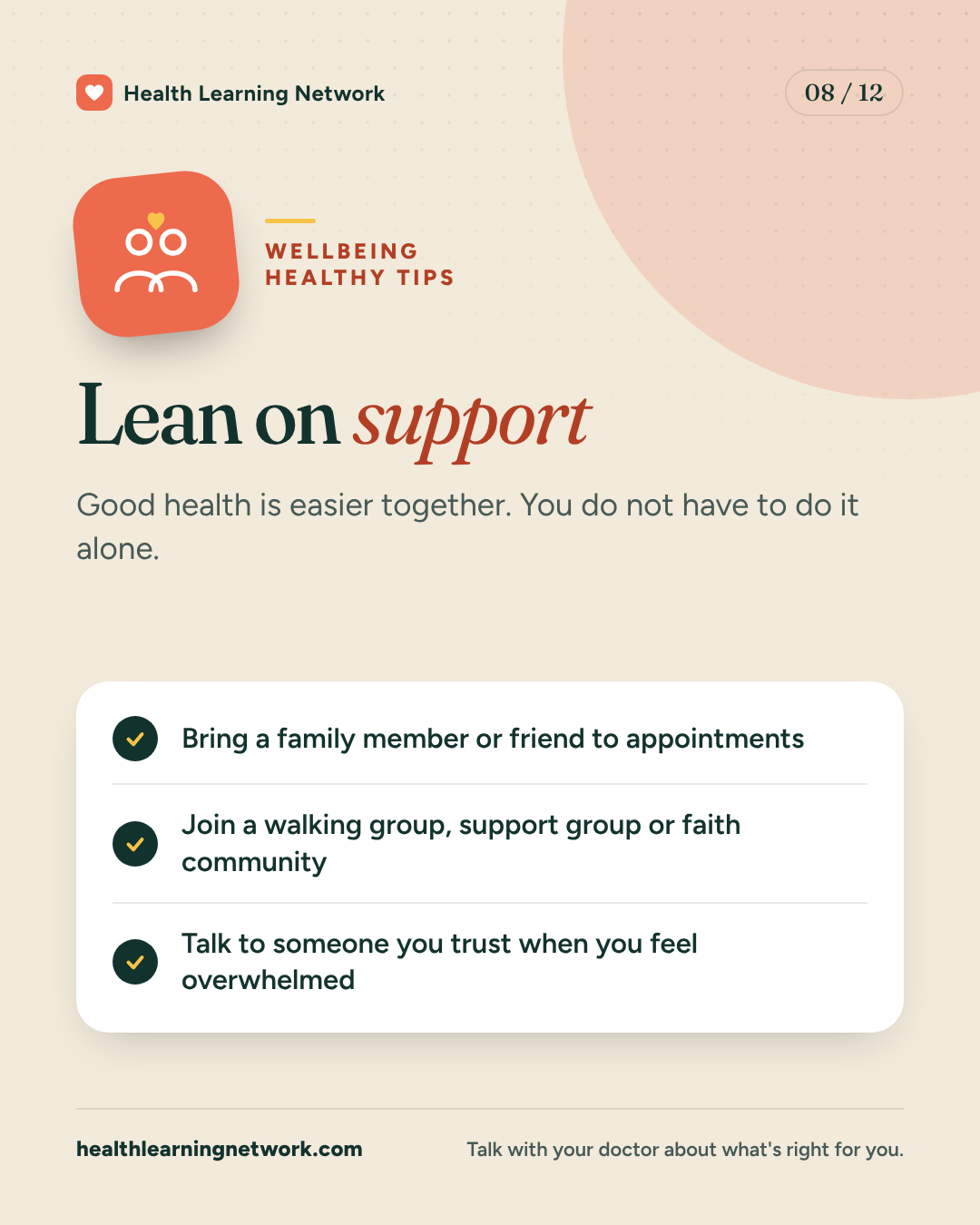
Lean on support: bring a family member or friend to appointments, join a walking, support or faith group, and talk to someone you trust when overwhelmed.
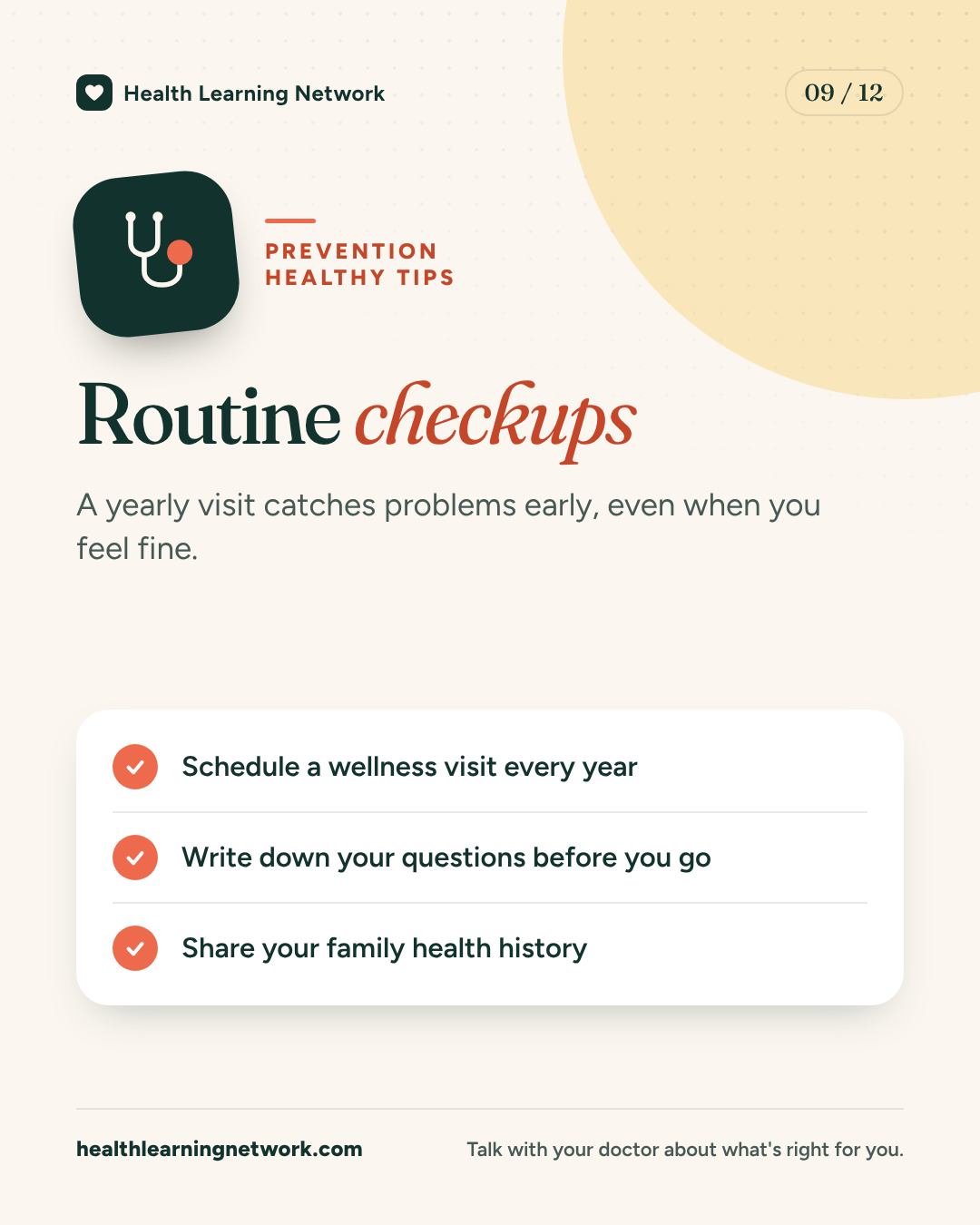
Routine checkups: schedule a wellness visit every year, write down your questions before you go, and share your family health history.
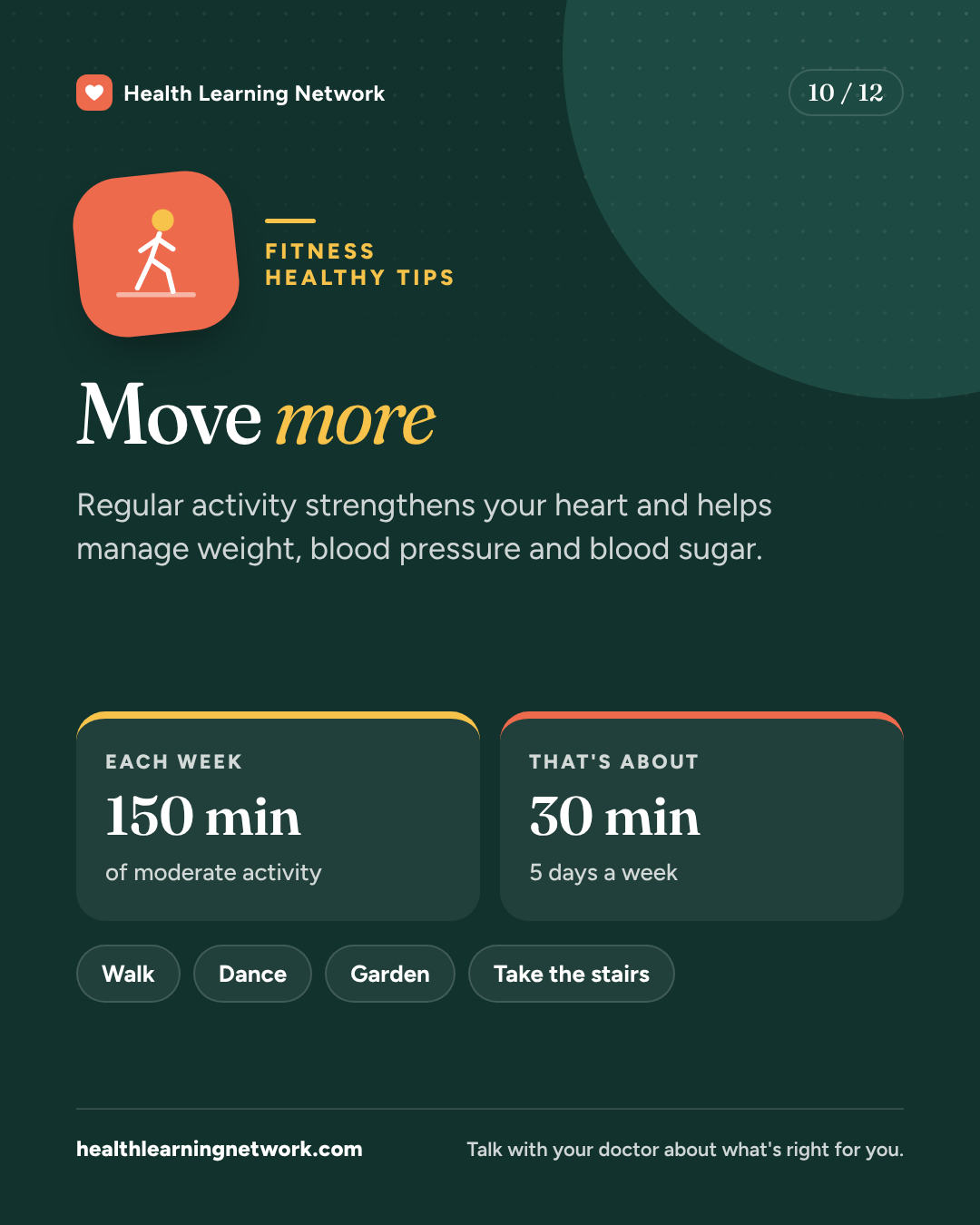
Move more: aim for 150 minutes of moderate activity each week, about 30 minutes 5 days a week. Walk, dance, garden or take the stairs.
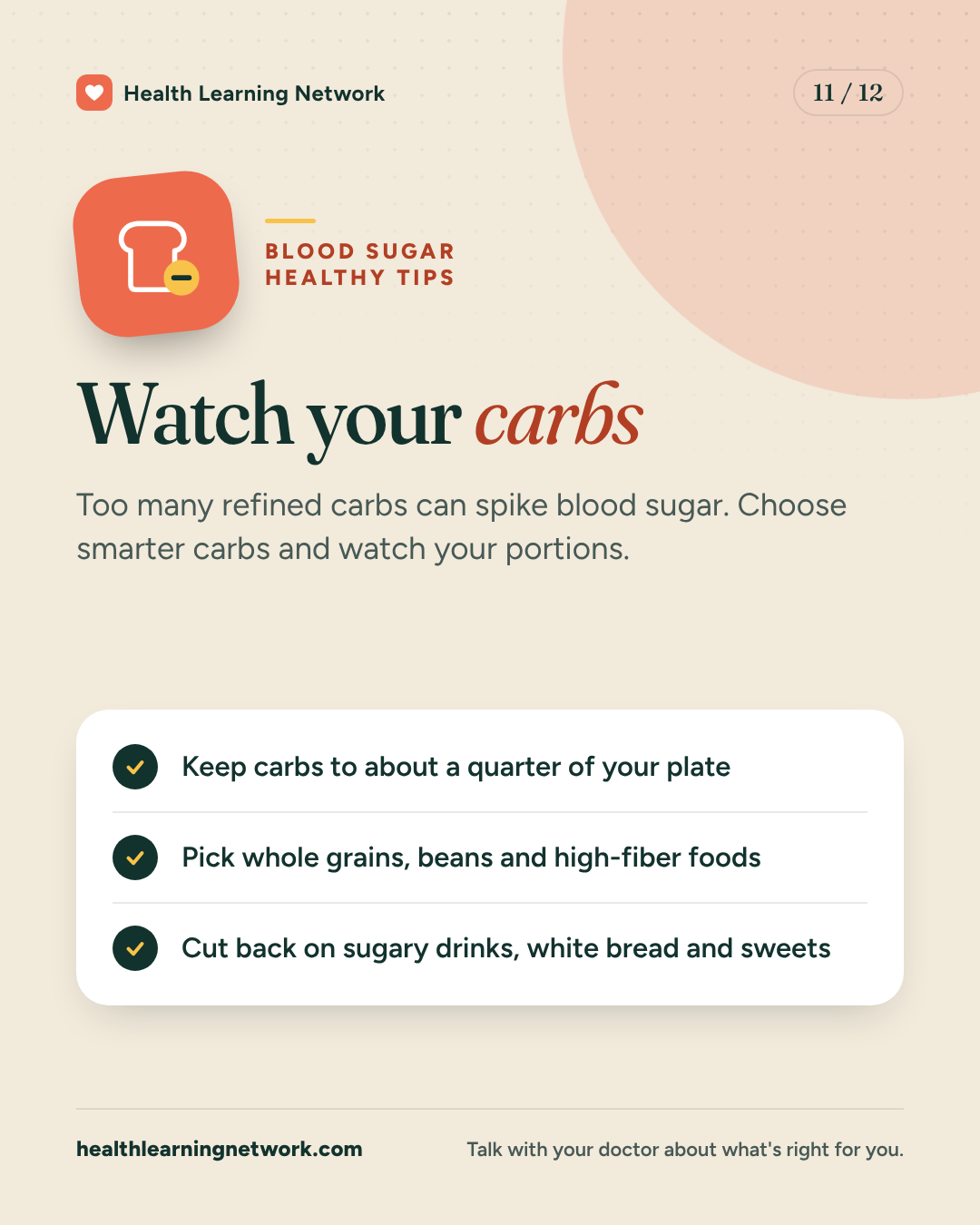
Watch your carbs: keep carbs to about a quarter of your plate, pick whole grains, beans and high-fiber foods, and cut back on sugary drinks, white bread and sweets.
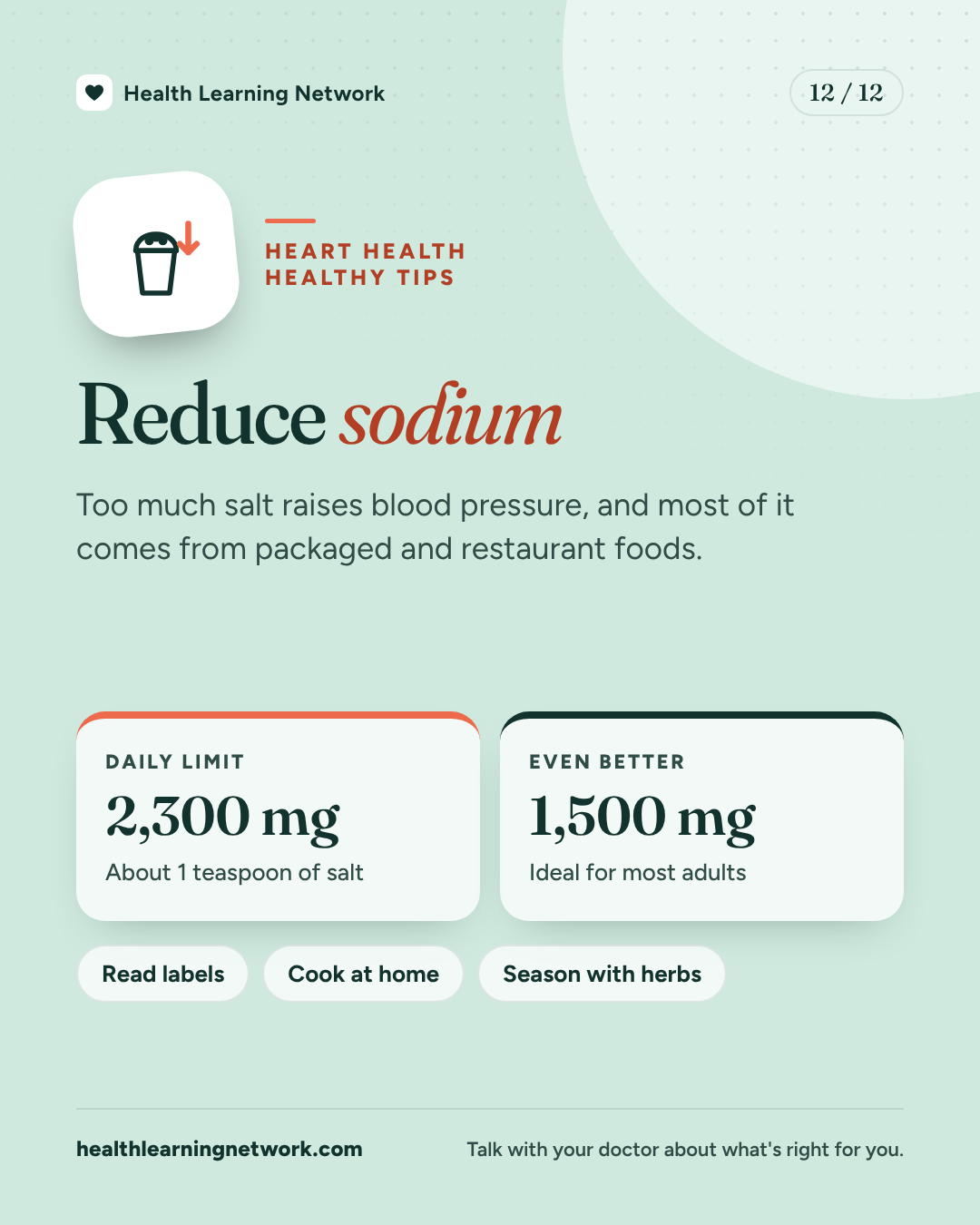
Reduce sodium: keep it under 2,300 mg a day, about 1 teaspoon of salt, and 1,500 mg is ideal for most adults. Read labels, cook at home and season with herbs.

These tips are for general education and are not a substitute for medical advice. Talk with your doctor about the screenings and goals that are right for you. Questions? Contact us.