Adult Health Learning

Chronic disease prevention

High blood pressure, heart disease, stroke, diabetes, kidney disease and some cancers affect African Americans at higher rates. Many of these risks can be lowered. Learn the facts, know your numbers, and share these with someone you love.
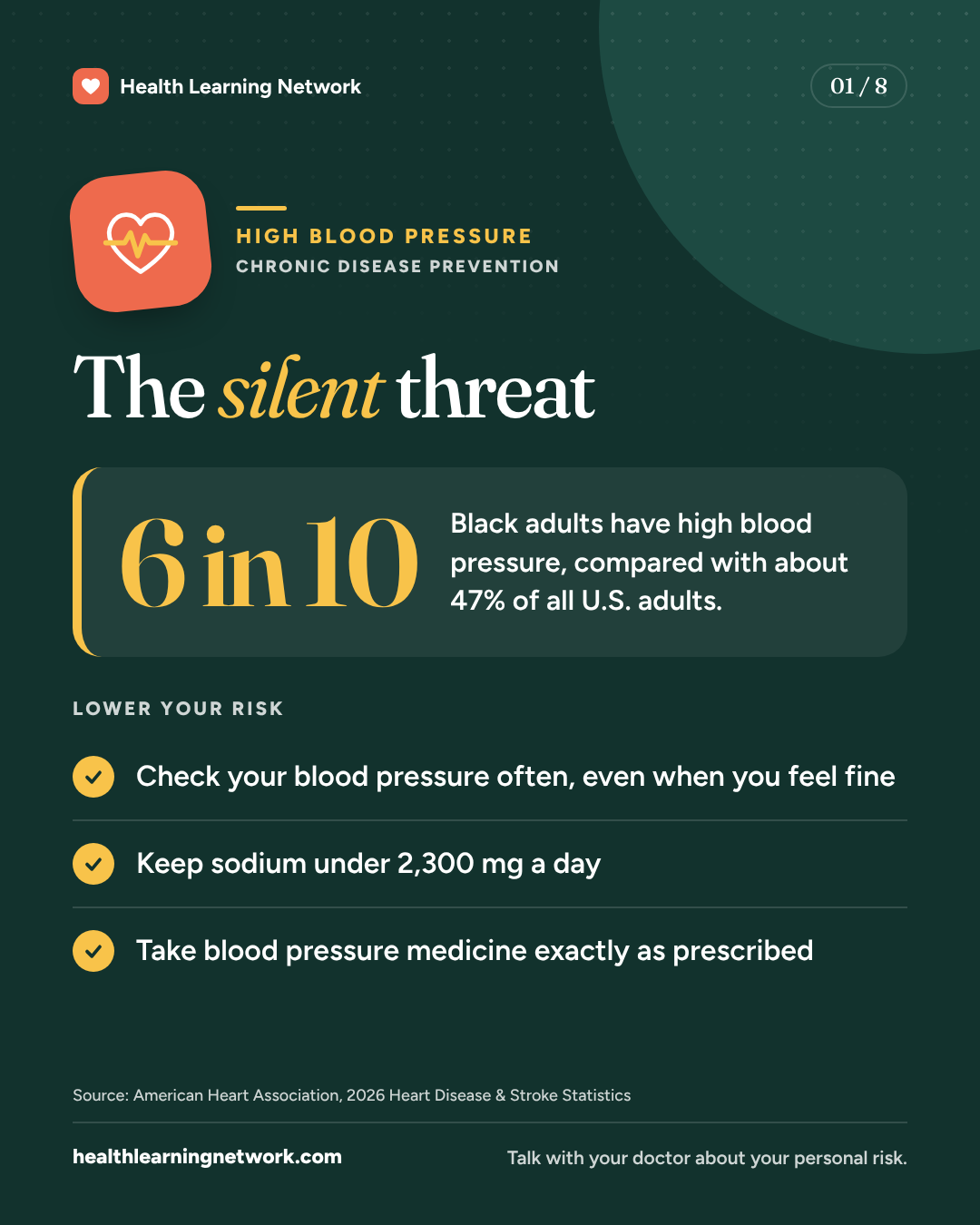
High blood pressure, the silent threat: about 6 in 10 Black adults have high blood pressure, compared with about 47% of all U.S. adults. Check it often, keep sodium under 2,300 mg a day, and take medicine as prescribed.
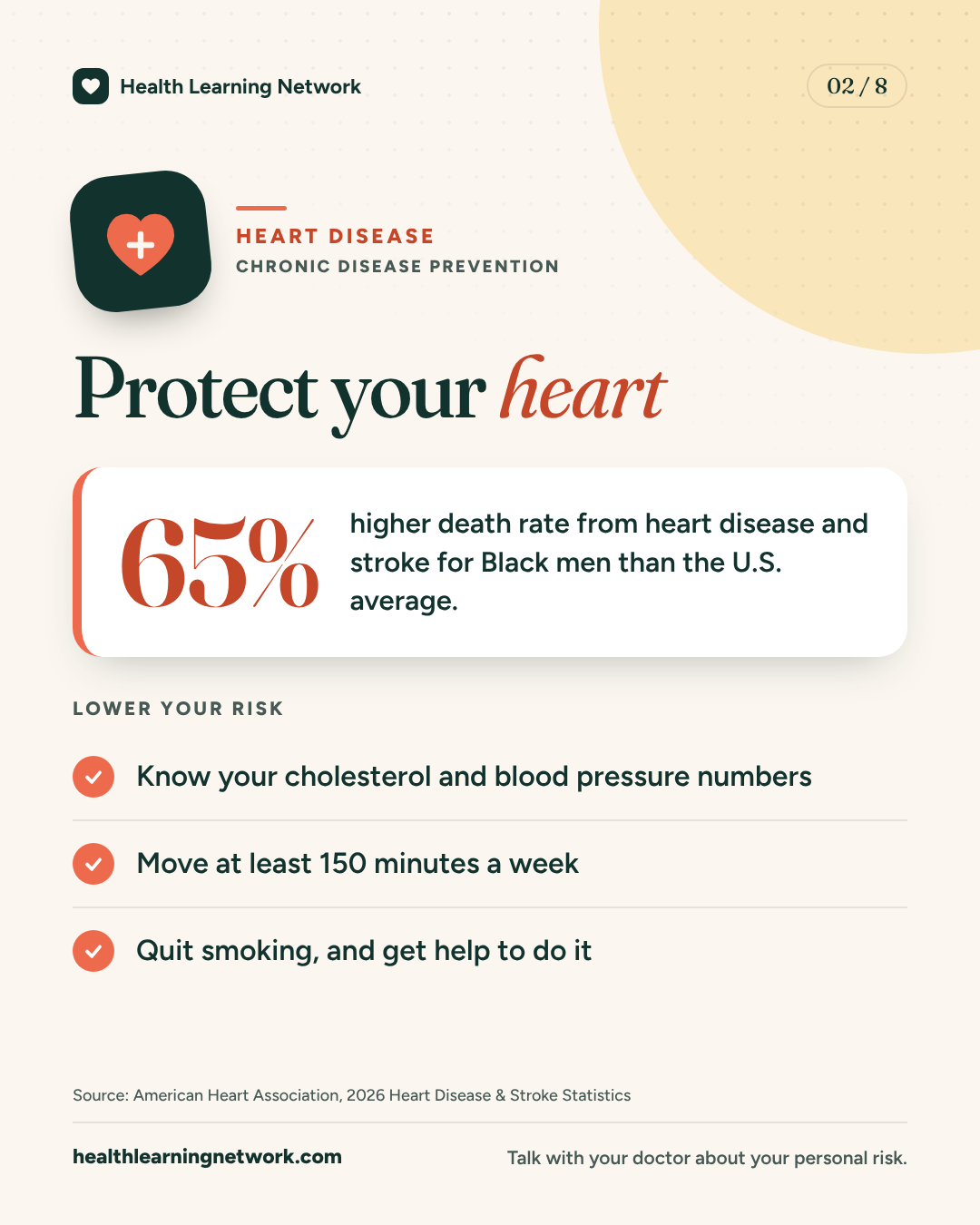
Protect your heart: Black men have a 65% higher death rate from heart disease and stroke than the U.S. average. Know your cholesterol and blood pressure, move 150 minutes a week, and quit smoking.
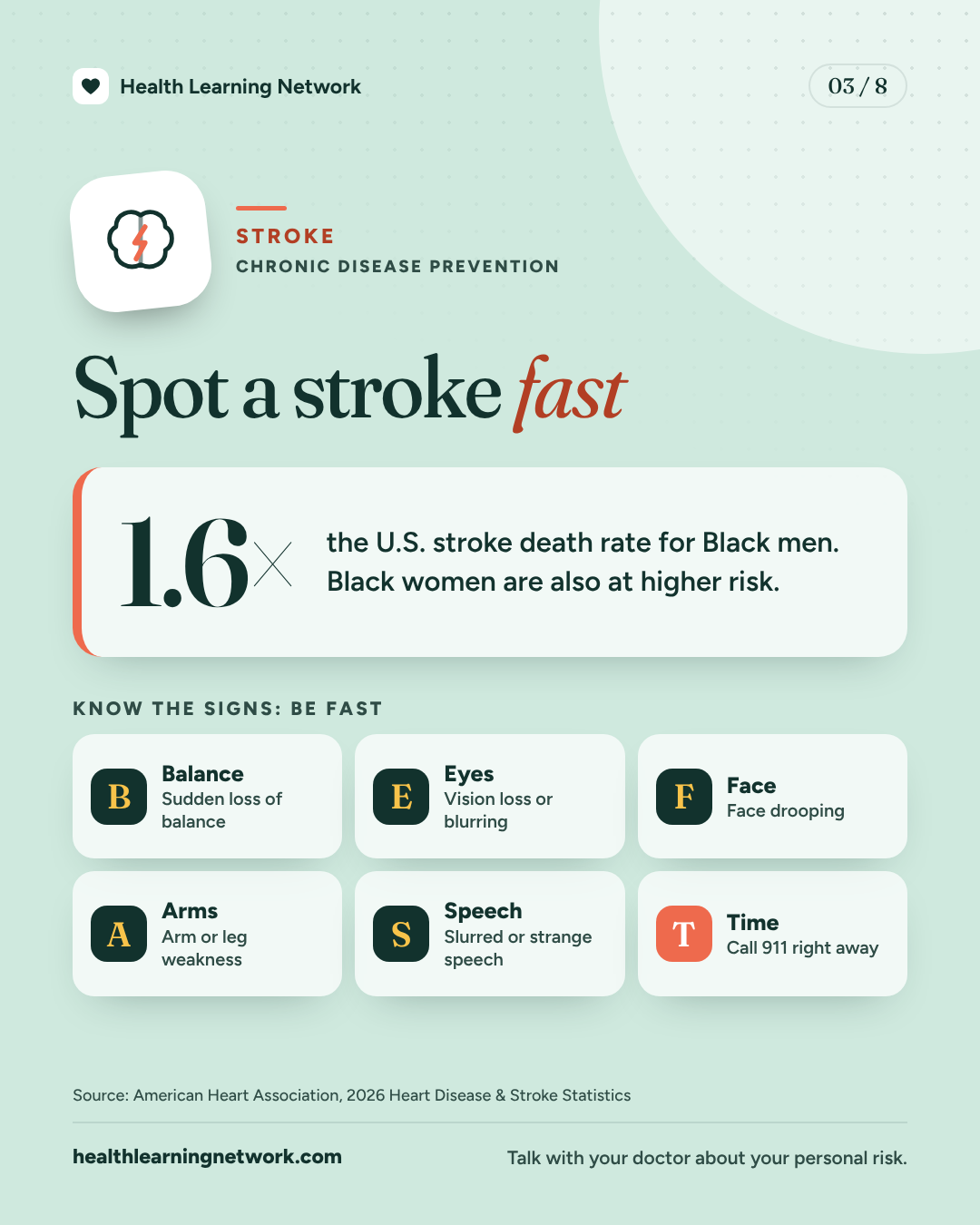
Spot a stroke fast: the stroke death rate for Black men is 1.6 times the U.S. rate. BE FAST: Balance loss, Eyes or vision loss, Face drooping, Arm or leg weakness, Speech trouble, Time to call 911.
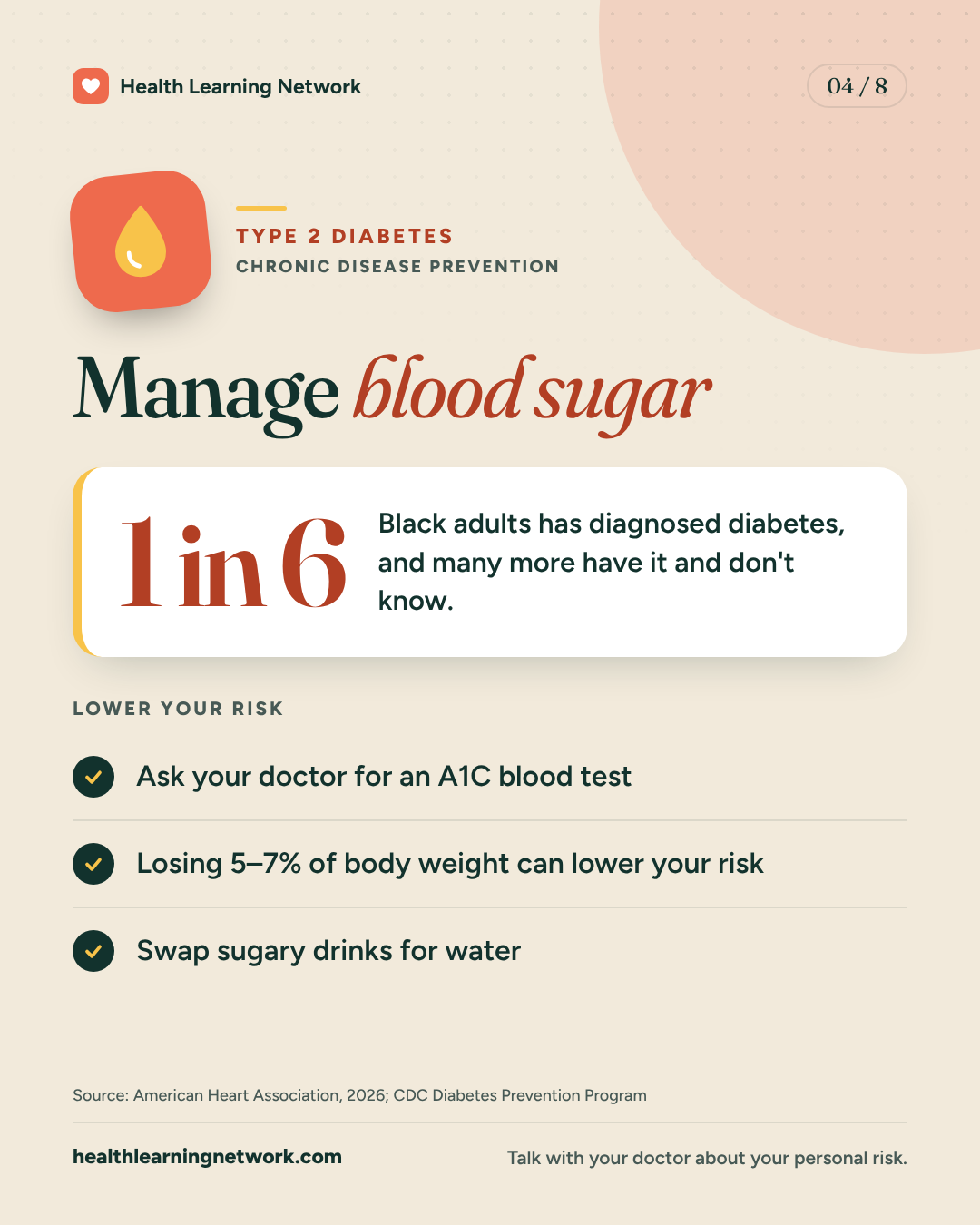
Manage blood sugar: about 1 in 6 Black adults has diagnosed diabetes. Ask for an A1C test, losing 5 to 7% of body weight can lower your risk, and swap sugary drinks for water.
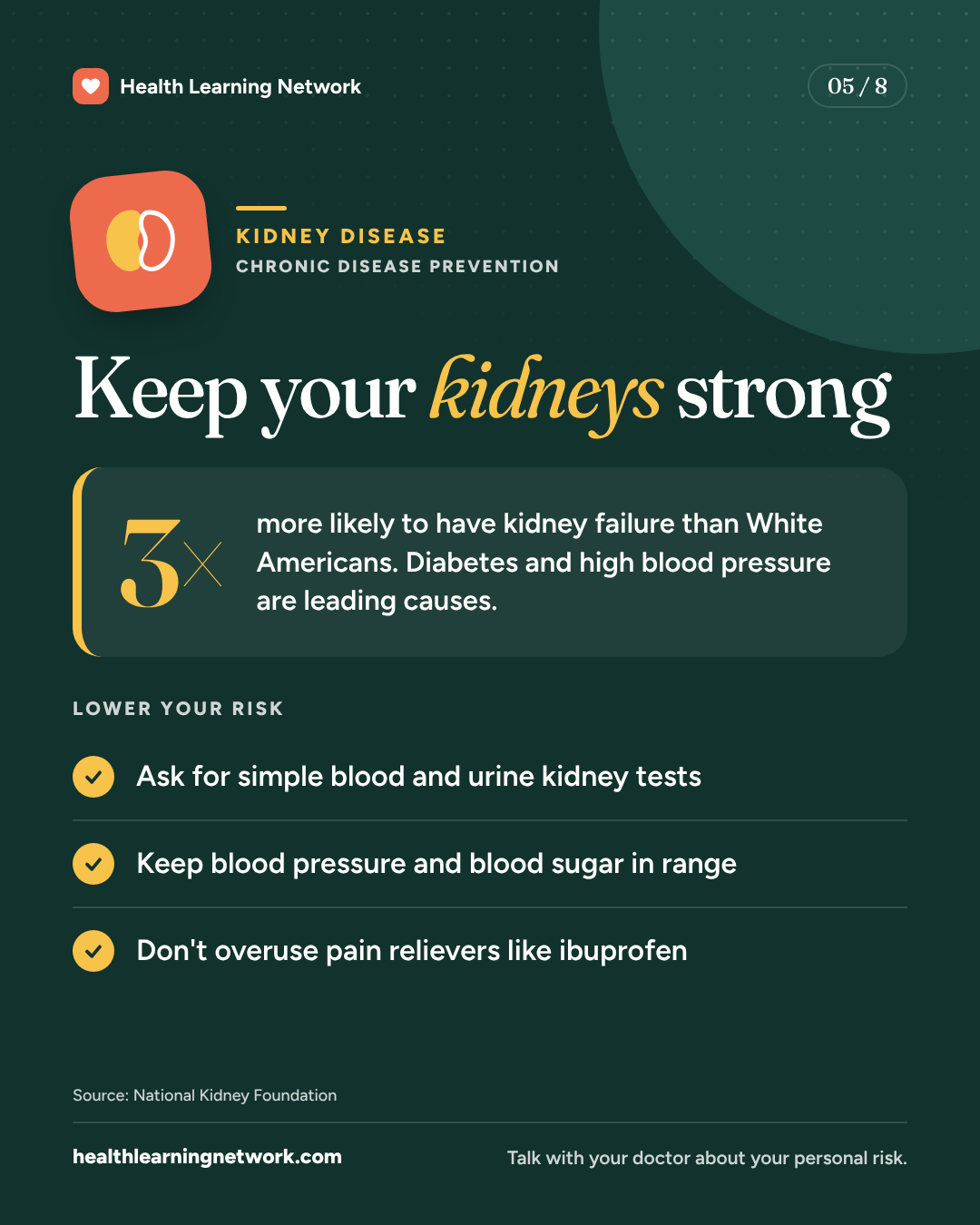
Keep your kidneys strong: Black Americans are 3 times as likely to have kidney failure as White Americans. Ask for blood and urine kidney tests, keep blood pressure and blood sugar in range, and don't overuse pain relievers like ibuprofen.
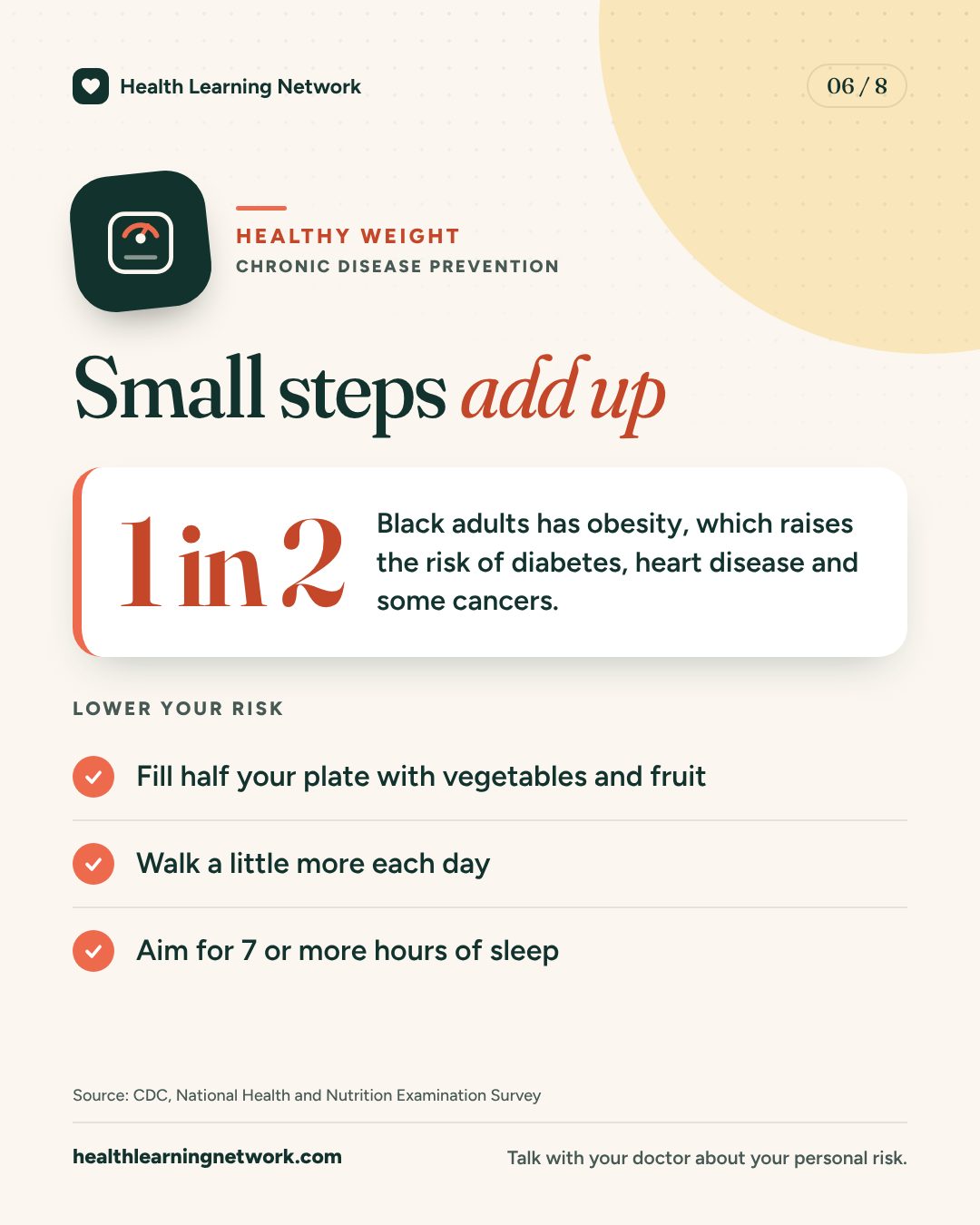
Small steps add up: about 1 in 2 Black adults has obesity, which raises the risk of diabetes, heart disease and some cancers. Fill half your plate with vegetables and fruit, walk more, and sleep 7 or more hours.
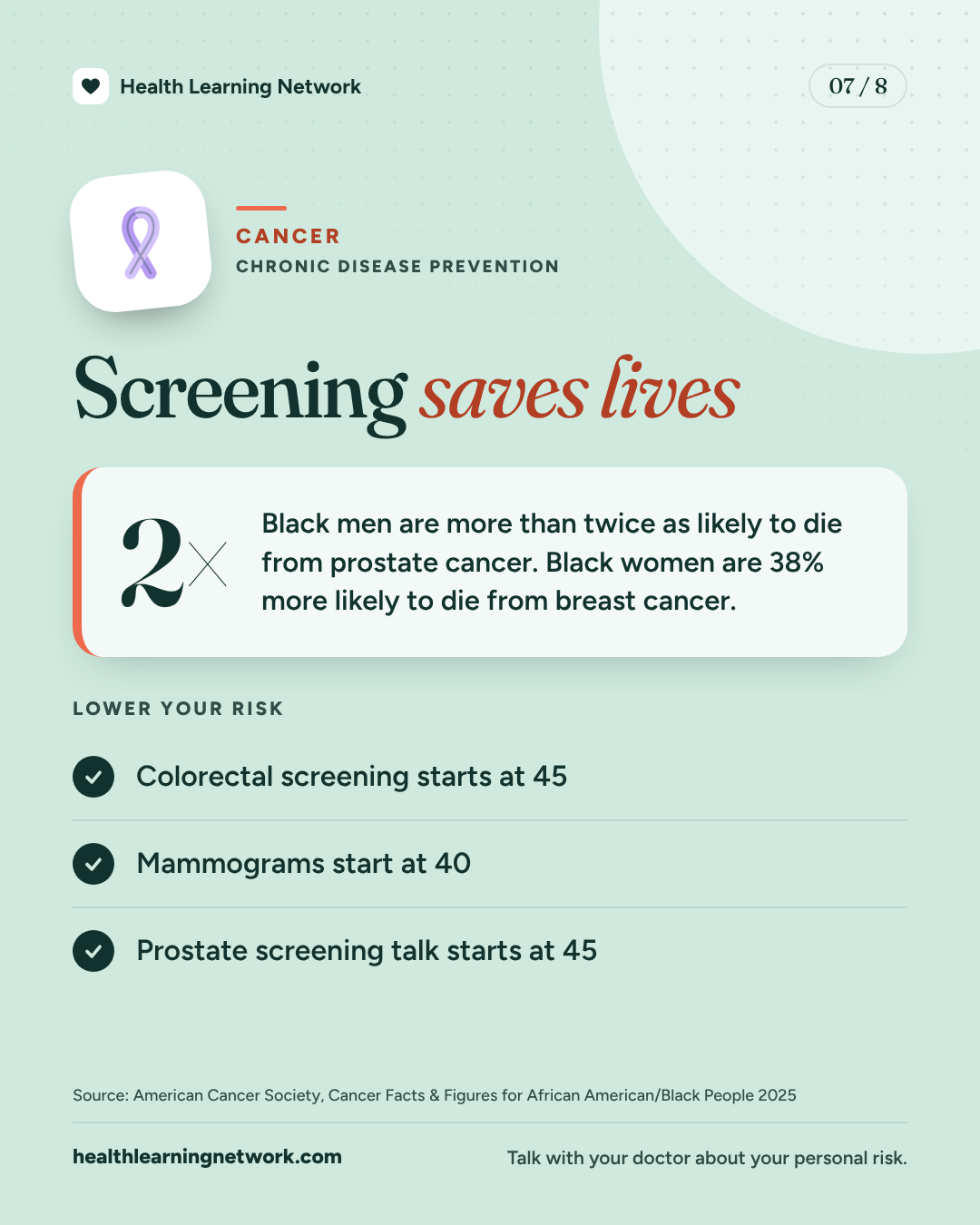
Screening saves lives: Black men are more than twice as likely to die from prostate cancer, and Black women are 38% more likely to die from breast cancer. Colorectal screening starts at 45, mammograms at 40, and the prostate screening talk at 45.
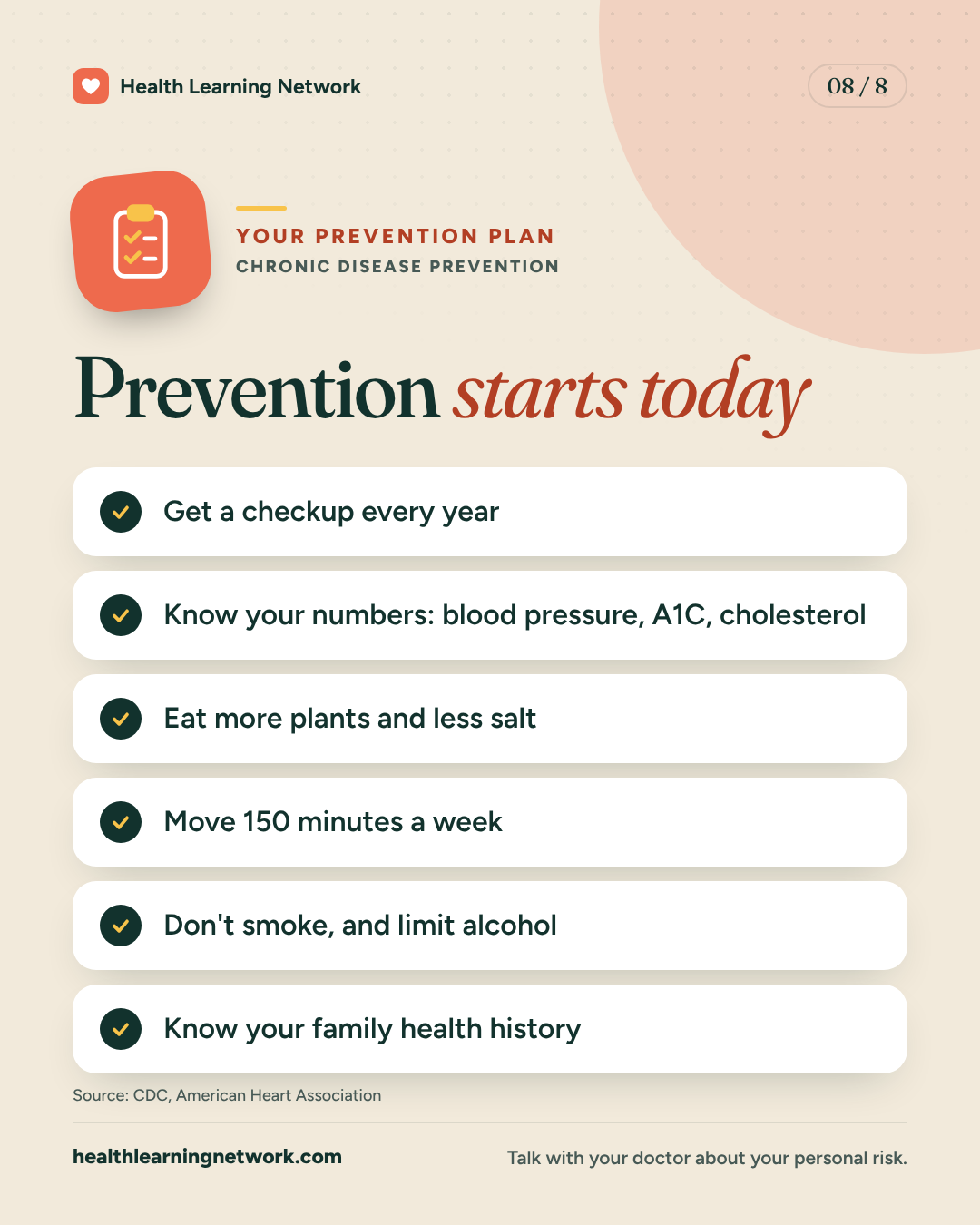
Prevention starts today: get a yearly checkup, know your blood pressure, A1C and cholesterol, eat more plants and less salt, move 150 minutes a week, don't smoke and limit alcohol, and know your family health history.

Take the next step

Bring this to your community

Looking for a health talk for your church, school or organization? Get in touch, or explore more everyday healthy tips.

Sources: American Heart Association, 2026 Heart Disease & Stroke Statistics · National Kidney Foundation · American Cancer Society, 2025 · CDC, NHANES. This information is for education and is not a substitute for medical advice. Talk with your doctor about your personal risk.